Zhipeng Shen
Researcher
Huawei Intelligent Automotive Solution BU (Yinwang) — 2030 Lab
About Me
Hi! I am a researcher at Huawei Intelligent Automotive Solution BU (Yinwang)’s 2030 Lab in Shanghai, where I work on VLA/WAM for autonomous driving.
Before joining Huawei, I received my Ph.D. from the Department of Aeronautical and Aviation Engineering at The Hong Kong Polytechnic University under the supervision of Dr. Hailong Huang. From October 2024 to March 2025, I was a visiting researcher at the DRAGON Lab at The University of Tokyo, hosted by Dr. Moju Zhao.
My research spans trajectory optimization, optimal control, aerial robotics, and learning-enabled autonomous systems. I am particularly interested in extending optimization-based planning toward multi-agent aerial systems, swarm autonomy, and learning-enhanced decision-making in complex environments.
“Nothing takes place in the world whose meaning is not that of some maximum or minimum.” ― Leonhard Euler
- Trajectory Optimization and Optimal Control
- Aerial Robotics and Generalized Multirotor Systems
- Multi-Agent Planning, Swarm Autonomy, and Learning-Enabled Decision-Making
Ph.D. in Aeronautical and Aviation Engineering, 2022-2025
The Hong Kong Polytechnic University, Hong Kong SAR, China
MEng in Control Engineering, 2019-2022
Beihang University, Beijing, China
BEng in Aircraft Design and Engineering, 2015-2019
Northwestern Polytechnical University, Xi’an, China
Featured Publications
Other Publications
Experience
- Develop learning-based decision and control models for autonomous driving, with a focus on trajectory-level meta-decision prediction and high-level reasoning.
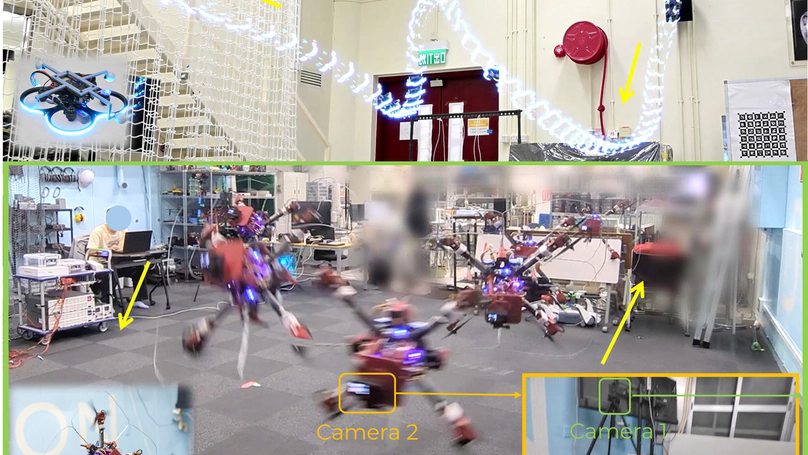
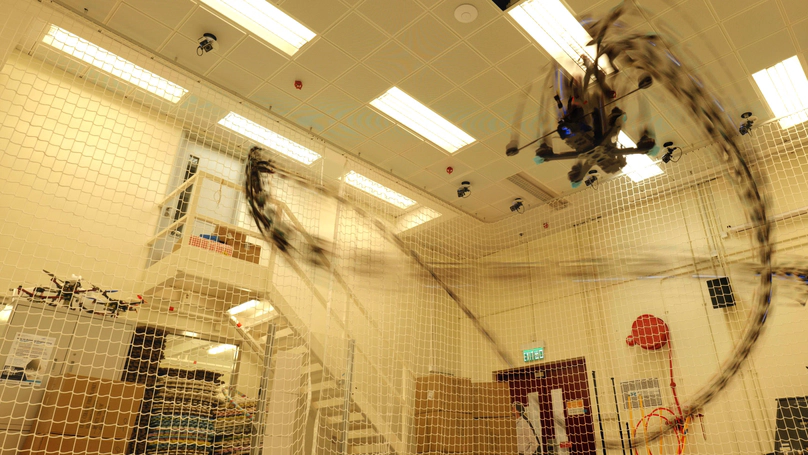
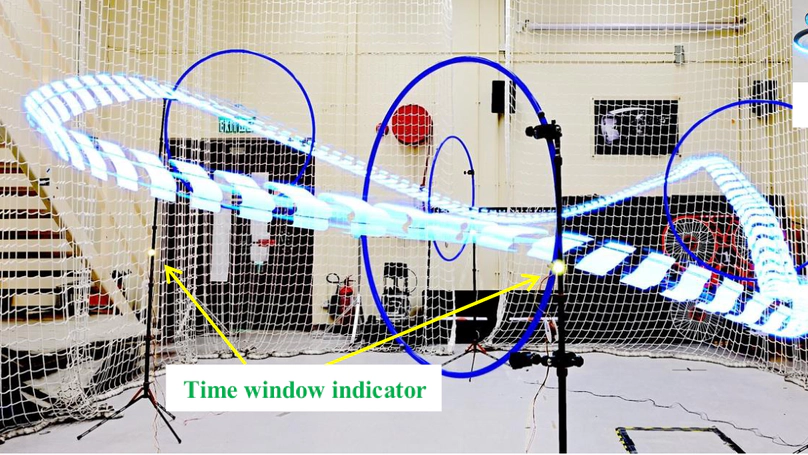
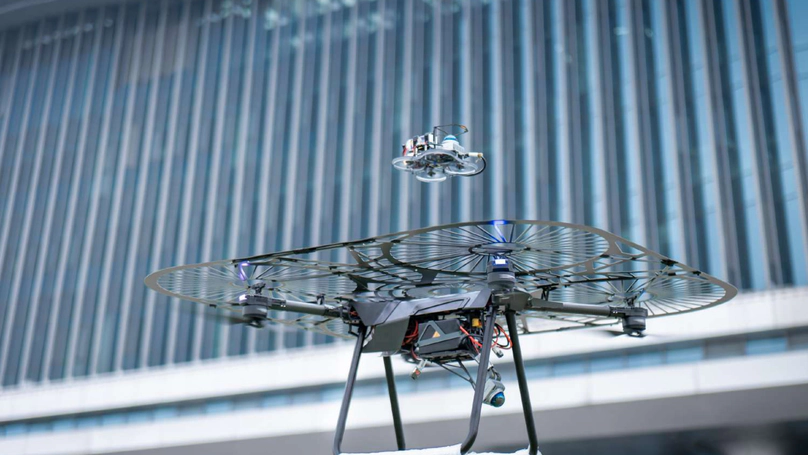
- Conducted the research leading to a first-author paper in IEEE TASE, developing an efficient trajectory-optimization framework for generalized multirotors via sequential convex programming and convexity exploitation.
- Applied the framework to conventional and tiltable multicopters, spanning optimal-control formulation, solver development, implementation, and experimental validation.
- Investigated close-approach guidance for rendezvous and docking of on-orbit servicing spacecraft; optimized relative trajectories using the Gaussian pseudospectral method and designed an LQR guidance law for the Clohessy–Wiltshire equations.
- Conducted representative mission simulations in Systems Tool Kit (STK) and analyzed guidance errors induced by measurement uncertainty.
- Received the Outstanding Intern Award.
Projects
Gallery